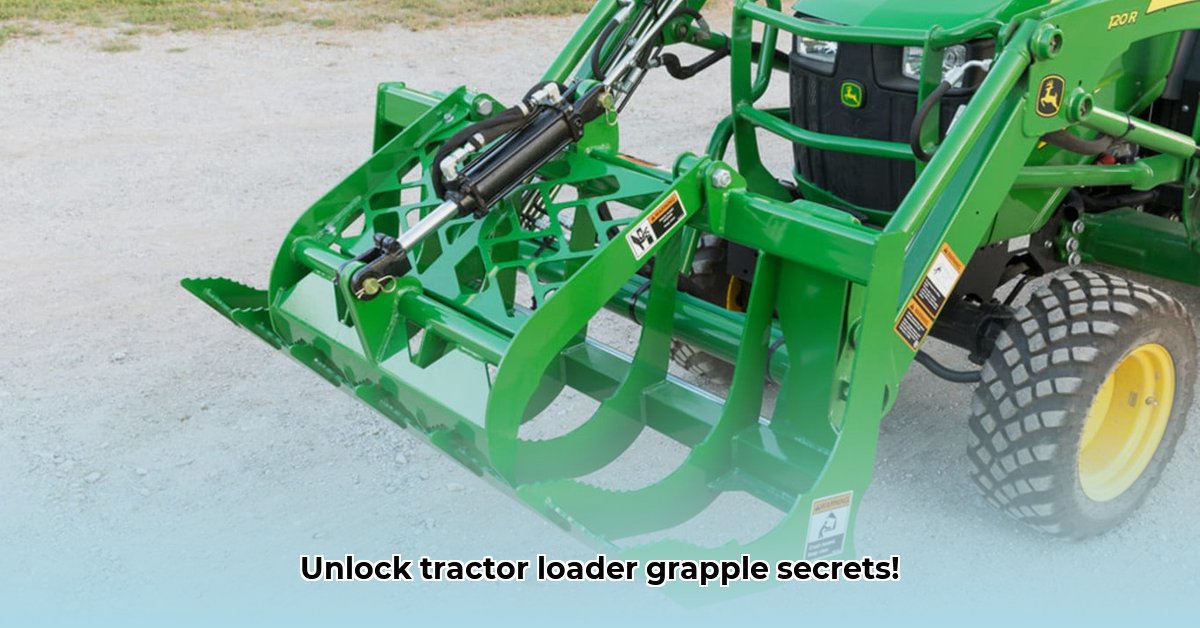
Choosing the right tractor loader grapple can significantly impact the efficiency and sustainability of your farming operation. This guide provides practical advice and reviews different grapple types to help you optimize your workflow and minimize environmental impact. For more information on Kubota grapples, check out this helpful resource.
Selecting the Right Tractor Loader Grapple: Matching Tool to Task
The first crucial step is identifying your primary needs. Different grapples excel at specific tasks. Will you primarily be handling heavy materials like rocks and compacted soil, or lighter materials such as brush and hay? Will you be working with delicate root systems? The material dictates the grapple design you need.
Short-tine grapples: Ideal for heavy, dense materials. These offer high lifting capacity but lower volume capacity. Think of them as powerful workhorses, perfect for moving rocks or compacted soil.
Long-tine grapples: Designed for lighter, bulkier materials like brush, leaves, or hay. They handle large volumes but may struggle with extremely heavy loads. They are the "movers" of the grapple world.
Variable tine length grapples (like "Wicked" root rakes): These versatile grapples offer adjustable tine spacing, allowing adaptation to various materials and tasks. Their adaptability comes at the cost of slightly lower maximum lifting capacity compared to dedicated short-tine grapples.
Beyond tine length, always consider your tractor's lifting capacity. Exceeding this limit can lead to serious equipment damage and potential injury. Always consult your tractor's specifications before selecting a grapple. How much weight can your tractor safely lift, and does that align with your grapple choice?
Understanding Different Grapple Types and Their Applications
Here's a comparison of common grapple types and their ideal uses:
| Grapple Type | Ideal Use Cases | Pros | Cons |
|---|---|---|---|
| Short Tine Grapple | Moving rocks, compacted soil, heavy debris | High lift capacity, durable, less stress on the tractor | Lower volume capacity, less versatile |
| Long Tine Grapple | Handling brush, leaves, hay, lighter debris | High volume capacity, good for delicate materials | Lower lift capacity, potentially more stress on the tractor |
| Variable Tine Grapple | Versatile use for various materials, root removal, etc. | Adaptability to different materials and tasks, efficient | Possibly higher initial cost, slightly lower max lift capacity |
Remember, these are guidelines. The optimal grapple will depend on your specific farm operations and soil conditions.
Sustainable Farming Practices with Your Tractor Loader Grapple
Using a grapple efficiently contributes to sustainable agriculture. Minimizing soil compaction and reducing the need for herbicides directly benefits the environment.
1. Plan Your Work: Map out your route to minimize unnecessary movements, saving fuel and reducing soil disturbance. Can you optimize your workflow to minimize passes over the same area?
2. Adjust Tine Spacing: Optimize spacing for the material. Wider spacing is good for large volumes of lighter materials, while narrower spacing suits heavier, smaller items. Incorrect spacing wastes time, fuel, and can damage soil.
3. Regular Maintenance: Regular lubrication, inspections, and timely repairs extend grapple lifespan and enhance efficiency, reducing waste and resource consumption. How often do you perform routine maintenance on your equipment?
4. Gentle Operation: Avoid aggressive movements that compact soil. Smooth, controlled movements are gentler on the land. What techniques can you use to minimize soil compaction during grapple operation?
Environmental Impact and Long-Term Cost Considerations
The environmental impact extends beyond immediate use. The materials used in grapple construction, such as Hardox AR450 steel, have a production and disposal cost. Choosing a grapple made from recycled materials or one designed for repairability significantly reduces environmental impact.
"Investing in a durable, high-quality grapple that lasts longer is often more ecologically responsible than opting for a cheaper, lower-quality model requiring frequent replacements," says Dr. Anya Sharma, Agricultural Engineer at the University of California, Davis.
While the initial cost of a high-quality grapple might be higher, the long-term savings from increased efficiency, reduced fuel consumption, and less downtime often outweigh it. A well-maintained grapple contributes significantly to the long-term financial and environmental health of your farm. What is the total cost of ownership for different grapple models over their lifespan?
Maximizing Efficiency: Attention to Detail
Efficient grapple use involves proper selection, careful operation, and consistent maintenance. Integrating these elements yields maximum value while minimizing environmental impact, contributing significantly to efficient and sustainable farming practices.
Minimizing Soil Compaction with Sustainable Root Grapples
Soil compaction reduces water infiltration and aeration, harming plant growth. Root grapples, used correctly, minimize soil disturbance and improve soil health.
Choosing the Right Grapple: The choice depends on soil type and crop residue. Heavier grapples work in denser soils, while lighter models suit lighter conditions. Consider tine spacing – wider spacing for larger residues.
Sustainable Practices: Integrate root grapple use with cover cropping (planting cover crops to improve soil structure) and Controlled Traffic Farming (CTF) to designate traffic lanes and reduce compaction.
Operational Best Practices: Avoid overworking the soil, monitor soil moisture, and ensure proper maintenance.
Evaluating Grapple Performance: Regularly assess the effectiveness of your root grapple by monitoring crop yields and water infiltration.
Reducing soil compaction is an ongoing process requiring consistent effort and adaptation. Root grapples, integrated with sustainable farming practices, protect soil health while contributing to higher yields.